Nolan’s ODYSSEY & the Topography of the Greek Myths
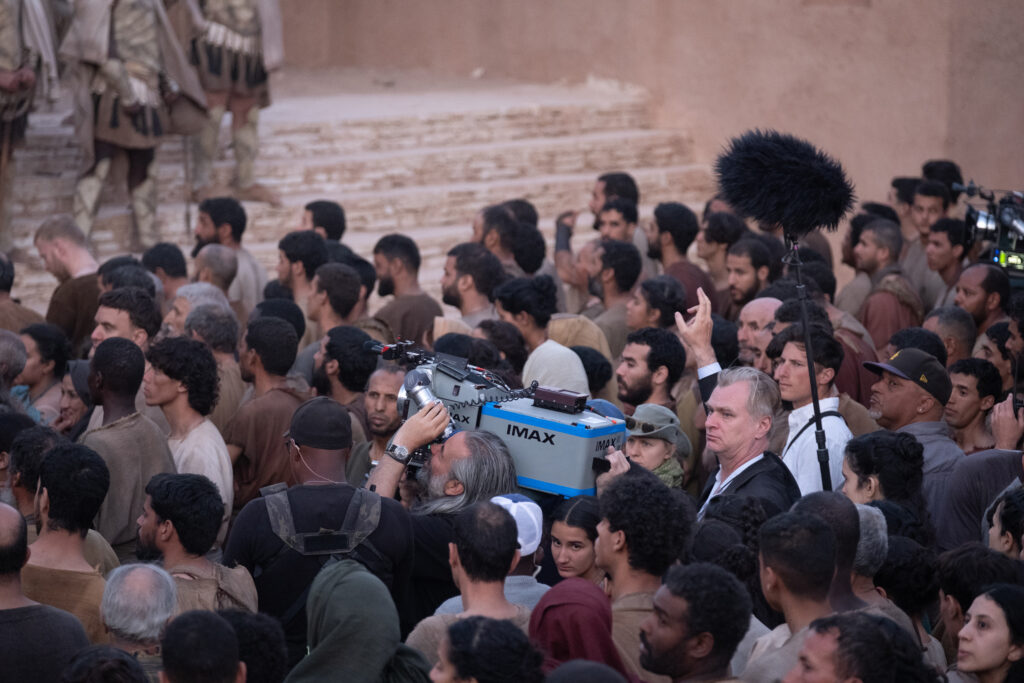
Christopher Nolan’s latest take on Homer’s The Odyssey has already re-written the post-covid box-office history. The film’s global opening is Nolan’s biggest debut ever, while shattering the post-pandemic records, grossing over $282 million worldwide in just its first few days. The box-office success is accompanied by a great technical achievement: The ODDYSSEY is the first High-End film production, which is shot entirely with IMAX film cameras. As Rich Gelfond -chief executive of IMAX- underlines: “The IMAX of it all helped turn it from not only a blockbuster, but a global cultural event”. People are travelling to watch the film on the 40 IMAX screens that are available all over the world.
The theatrical release of The Odyssey, in combination with the mega box-office success and its great technological achievement sparked a massive global interest in the ancient Greek mythology. The fans are also revisiting related classic titles like ‘Ulysses’ (1954), ‘Jason and the Argonauts’ (1963), ‘Troy’ (2004) or even audiobooks based on Homer’s epics. It is also worth mentioning that NBC’s miniseries ‘The Odyssey’ (1997) starring Armand Assante, climbed into digital rental and VoD charts, including Apple TV’s top lists, while the recent cinematic take attempted by Umberto Pasolini’s ‘The Return’ (2024) starring Ralph Fiennes, is rising again as an alternative realistic take on Odysseus’ homecoming.
Within that global trend for the Greek mythology, the perennial quest for the possible topography of the Homeric epics is being revived and its ultimate destination is proven to be GREECE. Le Figaro has published a 162-page collector’s special edition -L’Odyssée – Sur les traces d’Ulysse (“The Odyssey – In the Footsteps of Ulysses”)- celebrating Homer’s epic. The Ionian Island of Ithaca is presented as the land of Odysseus, and it is introduced to readers as an ideal destination for cultural tourism. At the same time, the tourist gaze is now upon Peloponnese, the Greek region that accommodated the shooting of Nolan’s film.
But let us attempt a ‘visit’ to places that can be used to outline the possible locations of the Homeric landscapes.
Homeric Landscapes – Real Places in Homer’s Odyssey
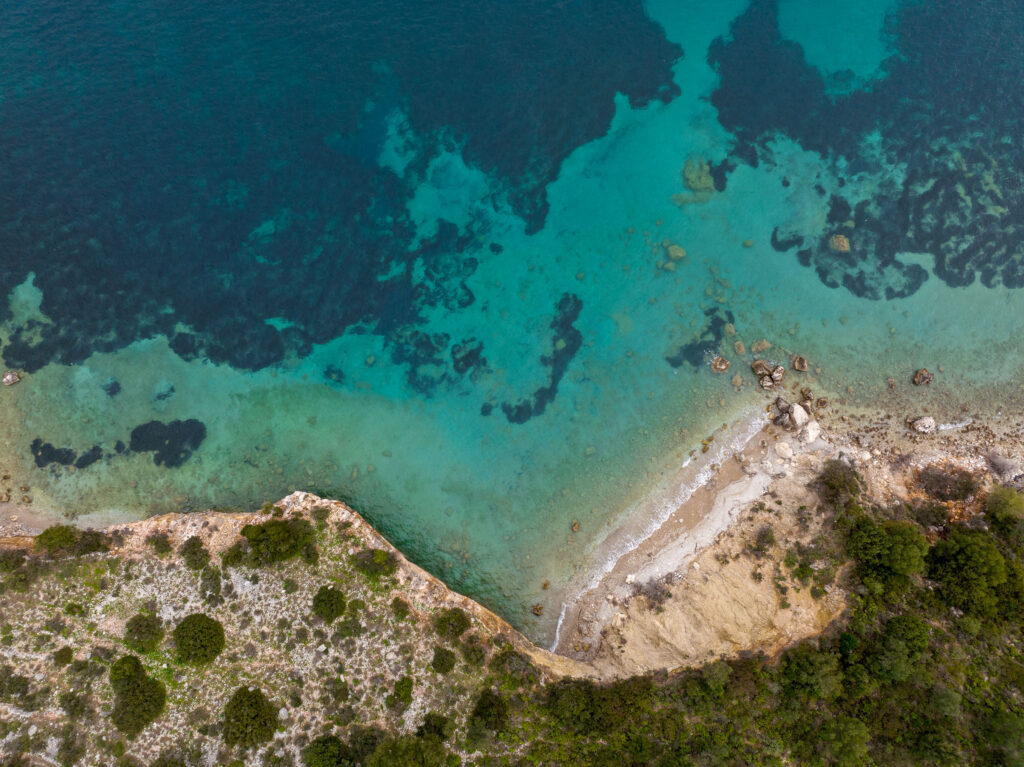
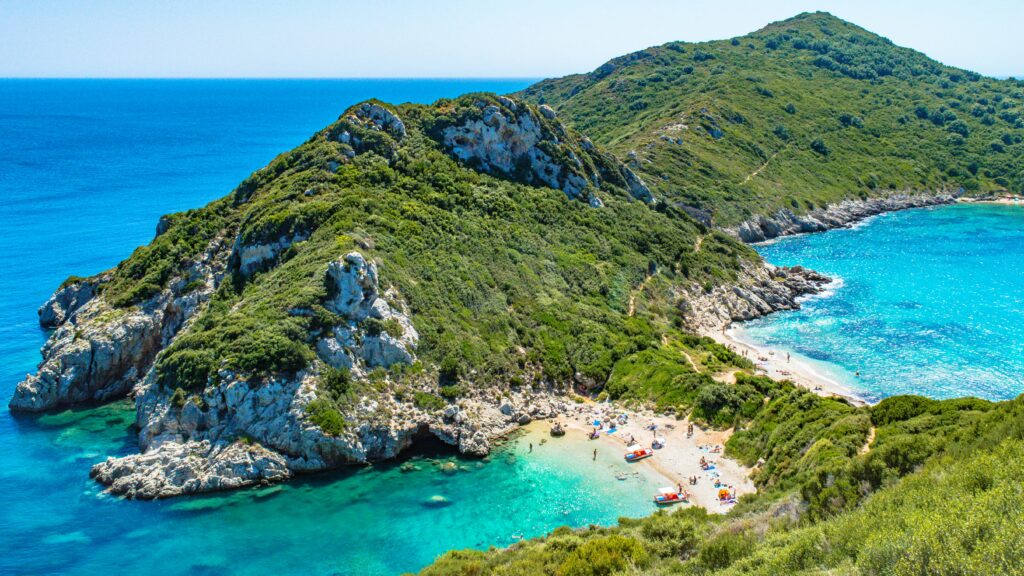
The real-world locations linked to the story of Odysseus are numerous. The ancient city of Troy (Ilion) is said to be in northwestern Turkey, at the Gallipoli Peninsula. The first stop on the hero’s homeward journey is the land of the Cicones (Ismaros), near present-day Maroneia in Thrace, Greece. Ithaca and Corfu are well-known Greek islands in the Ionian Sea, historically and geographically identified with the kingdom of Odysseus and the kingdom of the Phaeacians, respectively. The places visited by Telemachus in his search for news of his missing father are Pylos (the palace of King Nestor) and Sparta (the home of Menelaus and Helen of Troy), while the palace of Agamemnon, seat of the kingdom of the Achaeans, lies at Mycenae.
Utopian Lands – Mediterranean Inspiration for Imaginative Geographies
According to some scholars, the magical places that Odysseus weaves so skillfully into the dramatic account of his adventures told to the Phaeacians appear to draw on elements of ancient reality. The Land of the Lotus-Eaters (Lotophagoi) is identified by many with the southern coast of Tunisia; the Land of the Cyclopes is placed at the foot of the volcano Etna; the Island of Circe at Monte Circeo in Italy; while the sites of the Sirens, Scylla, and Charybdis is located in the Strait of Messina, between Italy and Sicily. Finally, Calypso’s island of Ogygia is placed either at Gibraltar — the westernmost edge of the then-known world — or in Malta.
A Mythic World in Cinema – Nolan entering the Homeric Universe
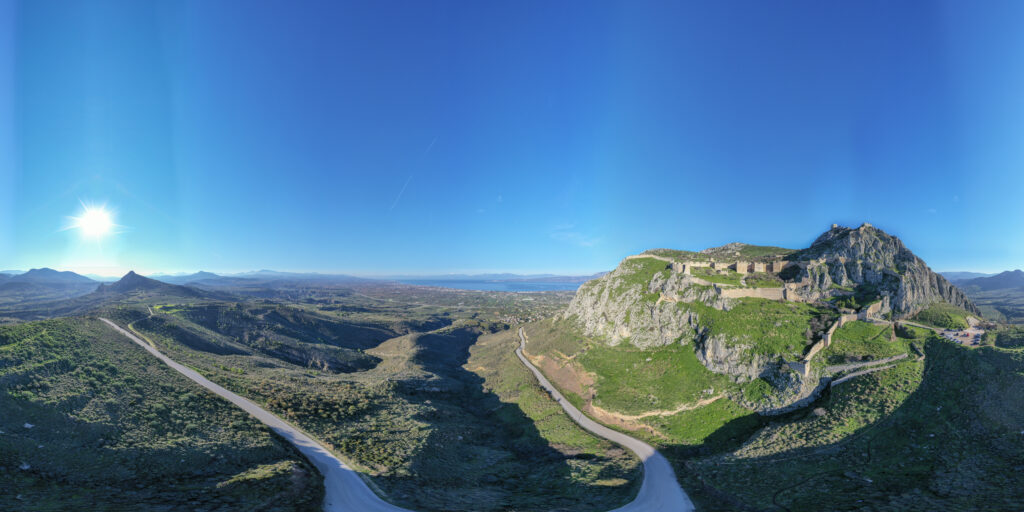
For his own iconic interpretation, Nolan mixed the Homeric epics (Odyssey and Iliad) with elements from Virgil’s Aeneid and Aeschylus’ Agamemnon, and most of the filming took place in actual locations, with the crew following a 91-day journey comparable to that of Odysseus. The world of the Greek myth stretched across three continents and seven countries — Greece, Italy, Morocco, Scotland, Iceland, Malta and the United States — while staying true to the overall spirit of the Homeric narratives. In Nolan’s cinematic universe, Troy was built in Morocco, the Underworld of Hades unfolded on the black sand beaches of Iceland, Favignana in Sicily became Ithaca, and Calypso’s Island was “discovered” in Malta. As for the filming in Greece, the shooting unfolded across the Peloponnese, the historic land of the Achaeans and the Mycenaean civilization. Voidokilia Beach and Nestor’s Cave was used as the land of the Cyclops, the Castle of Methoni stood as the palace of Menelaus and the Acropolis of Corinth (also known as Acrocorinth) represented the palace of king Agamemnon.